The Seat at the Table Is a Symptom
The contract isn't enough. Authority has to survive the first disagreement.
Pete Busam posted two questions this week that every fractional engagement eventually asks. The fractional leader wants to know why they weren't in the decision. The company wants to know why the outcome never showed up.
Both are fair. Pete's answer is a seat at the table, and he's right that the seat matters. But I've been on the other side of this. The seat isn't where it breaks.
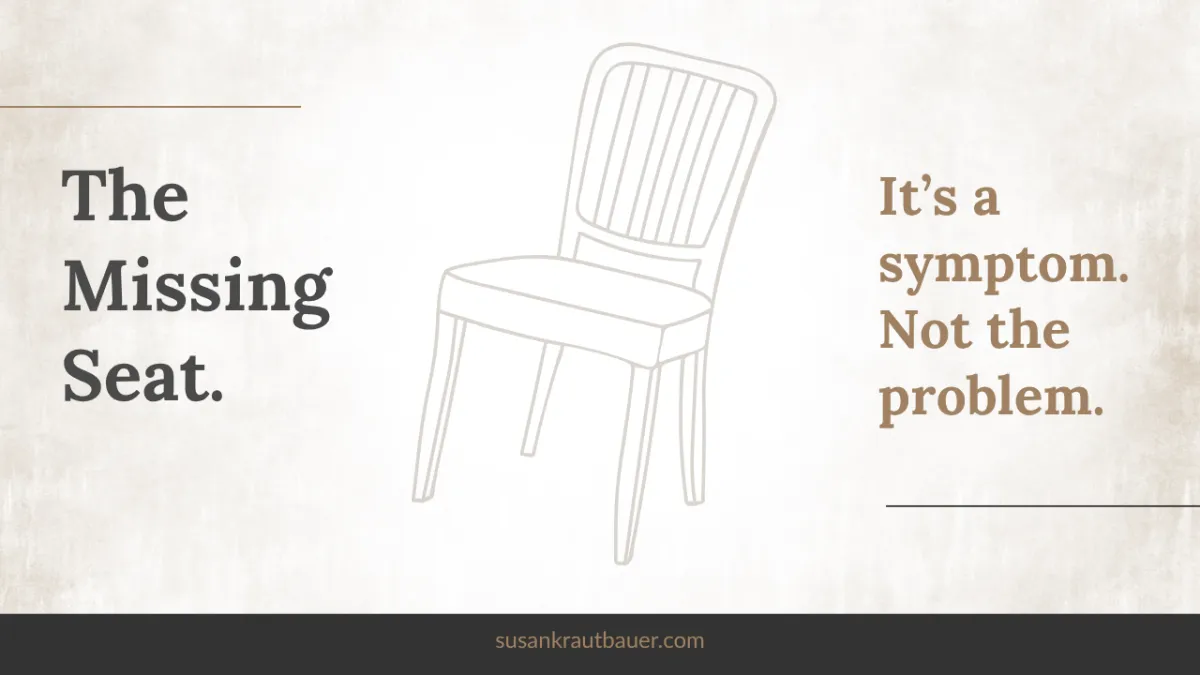
The missing seat at the table is just a symptom.
What actually broke?
I once owned marketing for an organization. Budget. Positioning. Visibility. Lead generation. Sales support. Results. The strategy was simple: reach the right buyers, build demand, give sales something to work with.
It was working. Right audience. Engagement moving. Traction starting.
Then an executive didn't like how some of it sounded. Too brash. Not how they believed the industry talked. Not how they'd say it. None of it was published under their name. It just wasn't in their voice.
So the requests started. Pull that post. Change that ad. Rewrite that article. It didn't matter what the agreed-upon data showed. I pushed back with the numbers. The answer never changed.
So we pulled the assets. Then came the questions. Why aren't we getting more leads? Why isn't sales getting more from marketing?
Because the strategy was being overridden — one asset at a time. That's assumed expertise. You hire someone for expertise you don't have, then override it based on what sounds right to you. Not customer response. Not market evidence. Not performance. Preference.
Knowing your business isn't the same as knowing every discipline inside it.
And when the softened version underperforms, the expert still owns the result. A contract doesn't stop that. Mine was in writing. It held right up until the first disagreement.
What are you actually hiring?
Before this happens to you, decide what you're buying.
Advice, while you keep every decision? That's advisory work.
Someone carrying out direction you've already set? That's execution.
Someone who owns an outcome? Then they need enough room to influence what drives it.
Accountability without authority is a bad deal for both sides, whether you're hiring an embedded fractional CMO who owns budget and partner terms, or a leaner advisory engagement scoped tighter. Know which one you're buying, and scope it accordingly.
Where do decisions stall?
Jay McBain called out GTM content that stays solely in the author's marketing or sales lane. He states real GTM runs across marketing, sales, partners, customer success, and product. Decisions cross those lines, and that's where they get stuck.
Bain's Paul Rogers and Marcia Blenko found decisions stall at four predictable fault lines: headquarters versus the field, corporate versus the business unit, one department versus another, and the company versus the outside partner working alongside it.
A fractional leader sits on that last fault line, and on Jay's, at the same time.
What do you settle before anyone signs?
Five questions. Answer them with the CEO in the room.
What does this person own outright?
What do they weigh in on without the final call?
What stays with the CEO, no exceptions?
Which decisions outside their function move the result you hired them for?
What's the standard for overriding them: data or preference?
Write the answers in the scope.
Then do the two things paper can't. Name who protects the agreement when the CEO disagrees. That's a tight, open relationship with your point of contact, someone who can advocate for you across the organization. And have the hard conversation before the first override, not after the third.
Fractional leaders, is this on you too?
Yes. Ask for the seat. Get the authority in writing. Ask who enforces it. If the client can't answer, you learned something before you billed an hour.
Pete is right that fractional doesn't mean outsourced. I'd add one: fractional doesn't mean overridden. A seat gets you in the room. Authority is what happens when you disagree with the CEO in it.
Who decides what in your fractional relationships right now? Has anyone written it down?
Susan Krautbauer is a Strategic Advisor working with leadership teams who need to move from effort to traction. Learn more at susankrautbauer.com
This article was developed with AI-assisted drafting and editing, consistent with my belief that working with AI as a tool, not a replacement for human thinking, is exactly the point.